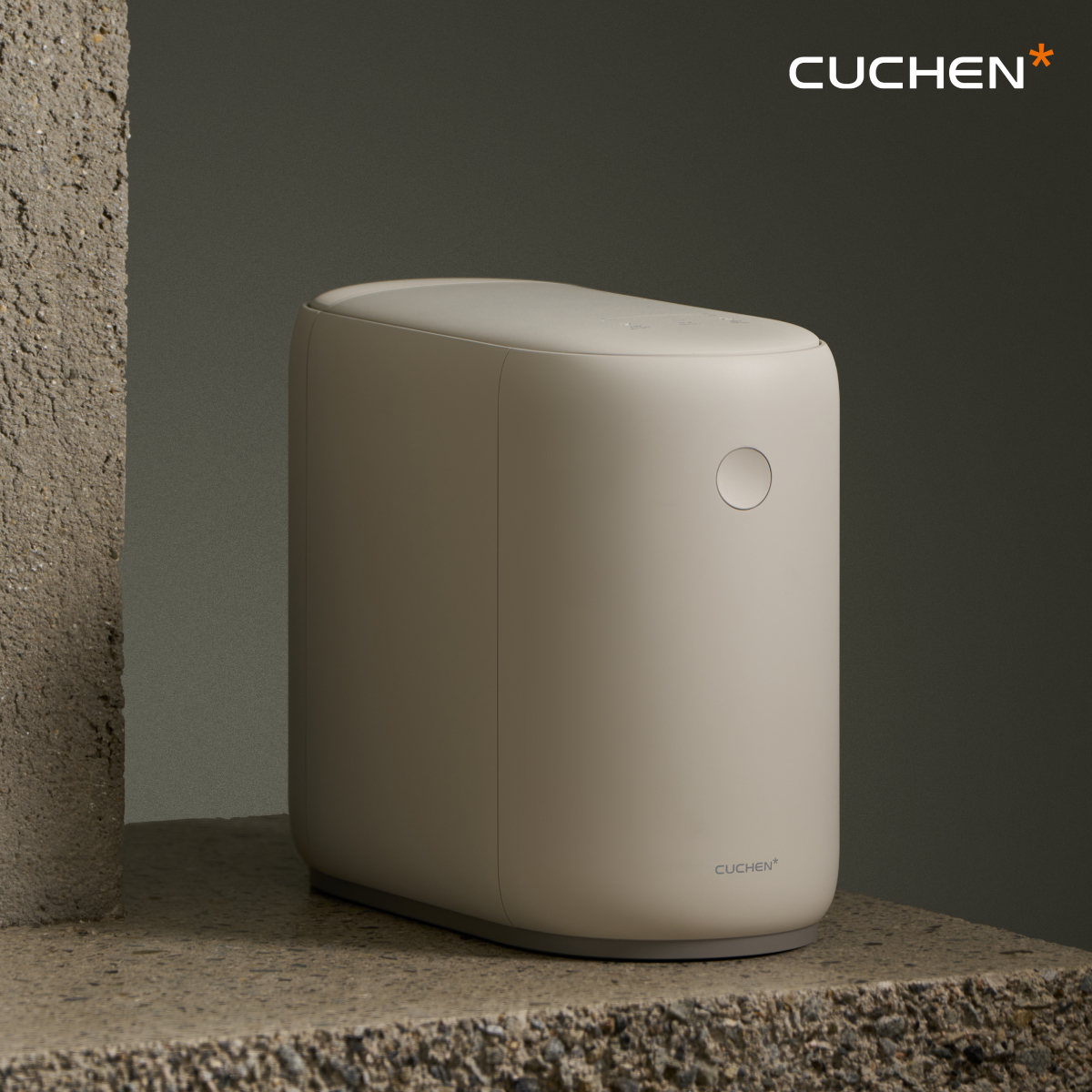
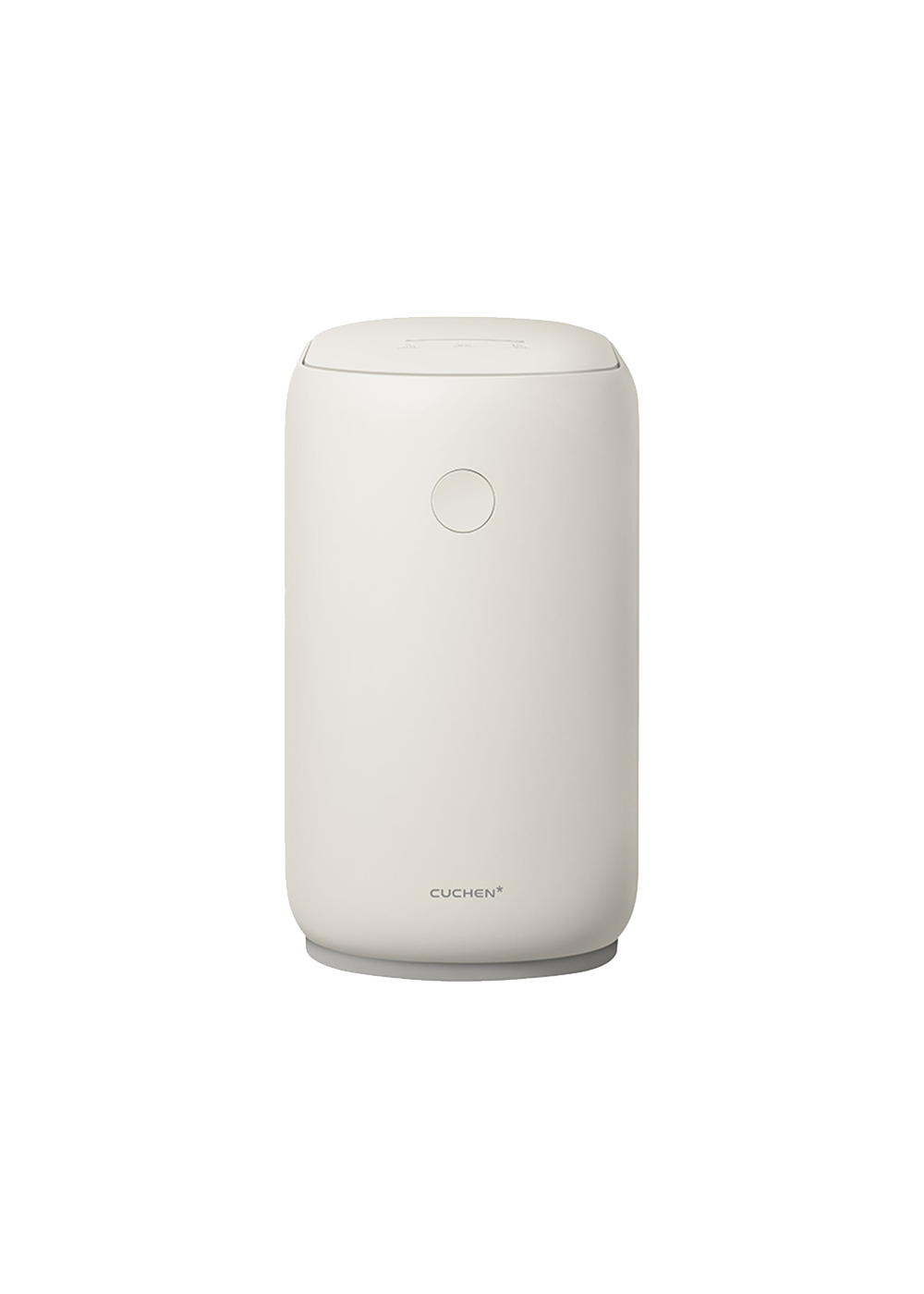
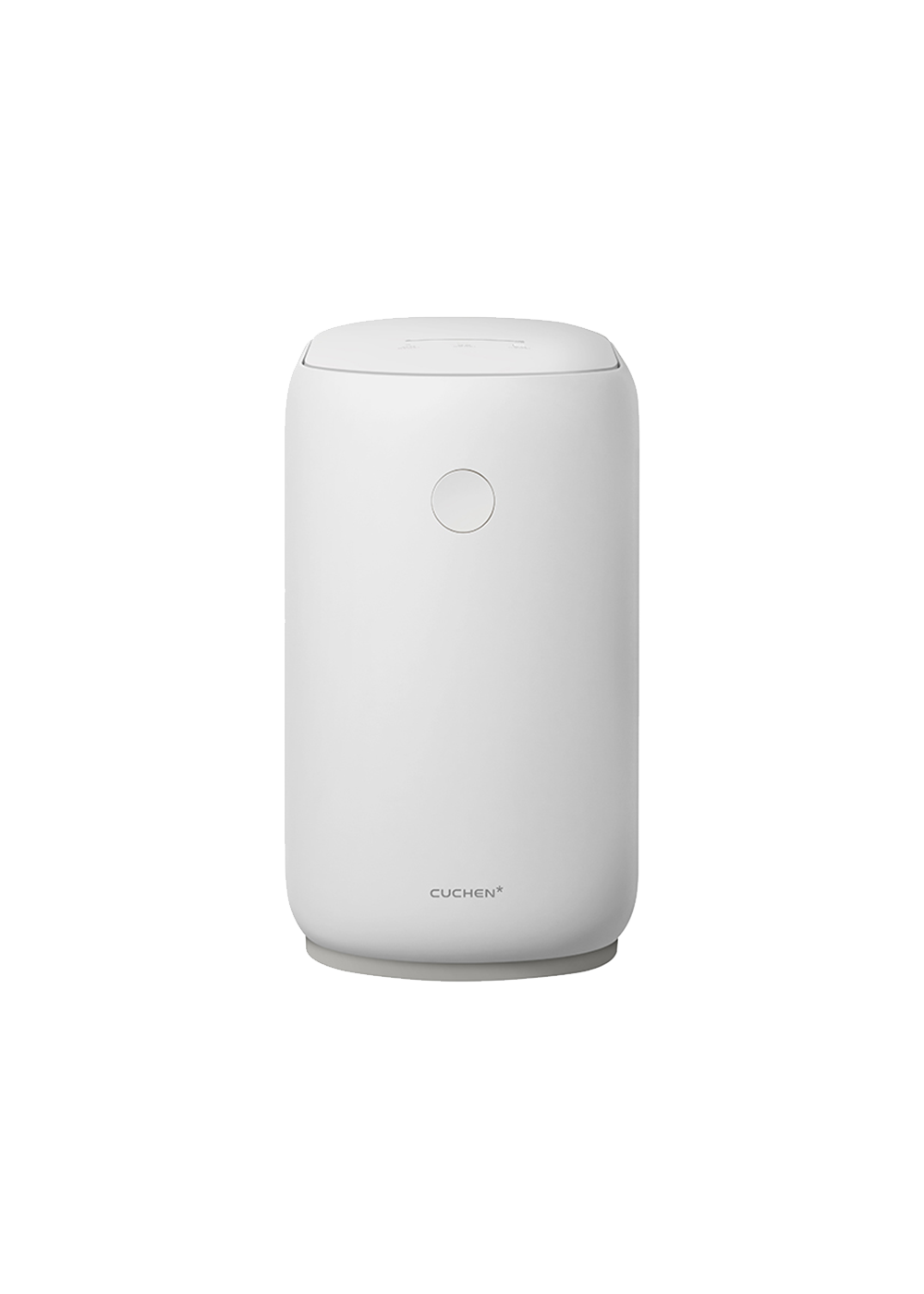
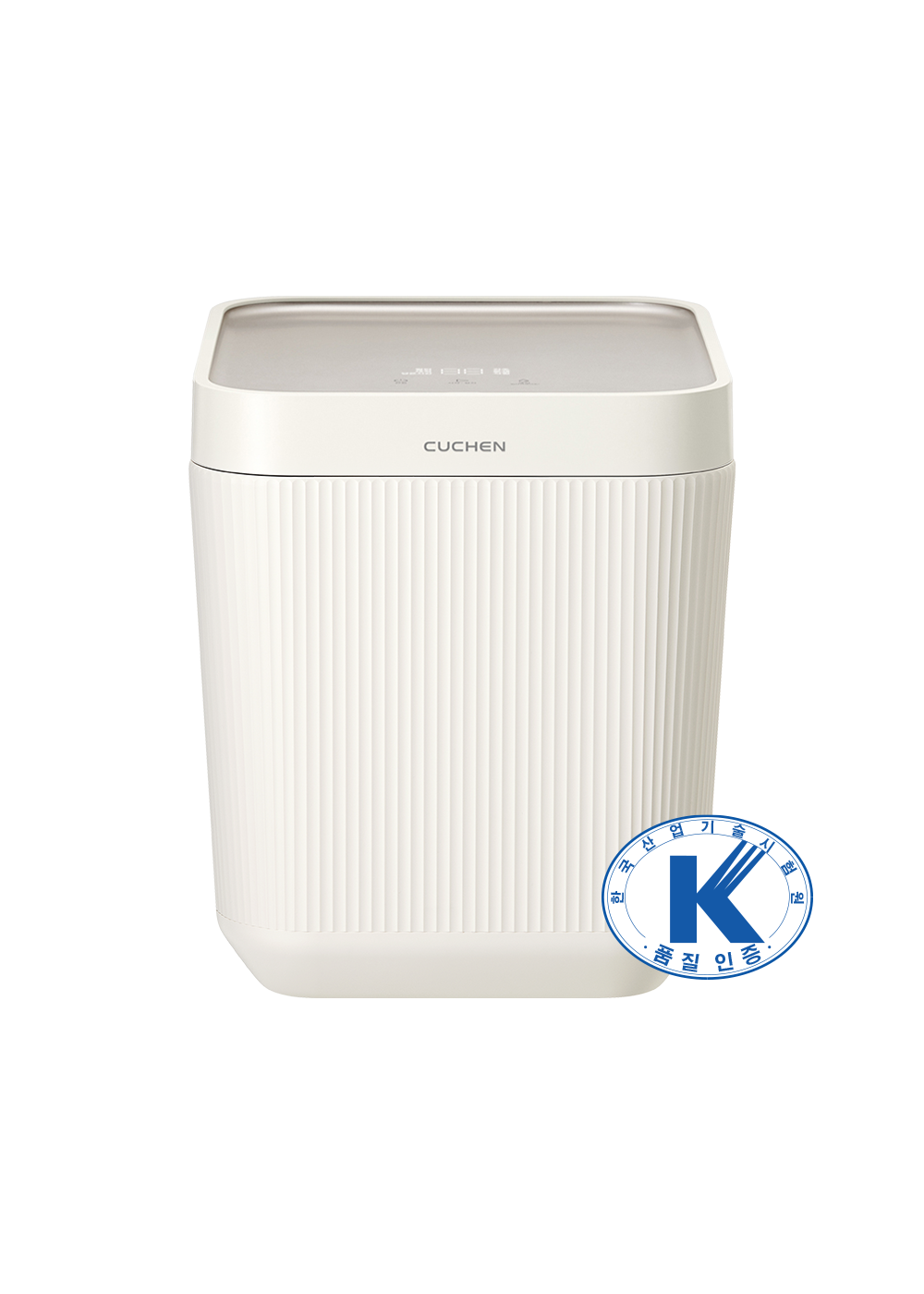
Officially listed 3L capacityApprox. 5 to 8 hours70-minute cleaningFilter alert and reset
The official product information lists drying, grinding, and cooling stages, a 70-minute automatic cleaning cycle, and a deodorizing-filter replacement alert and reset.
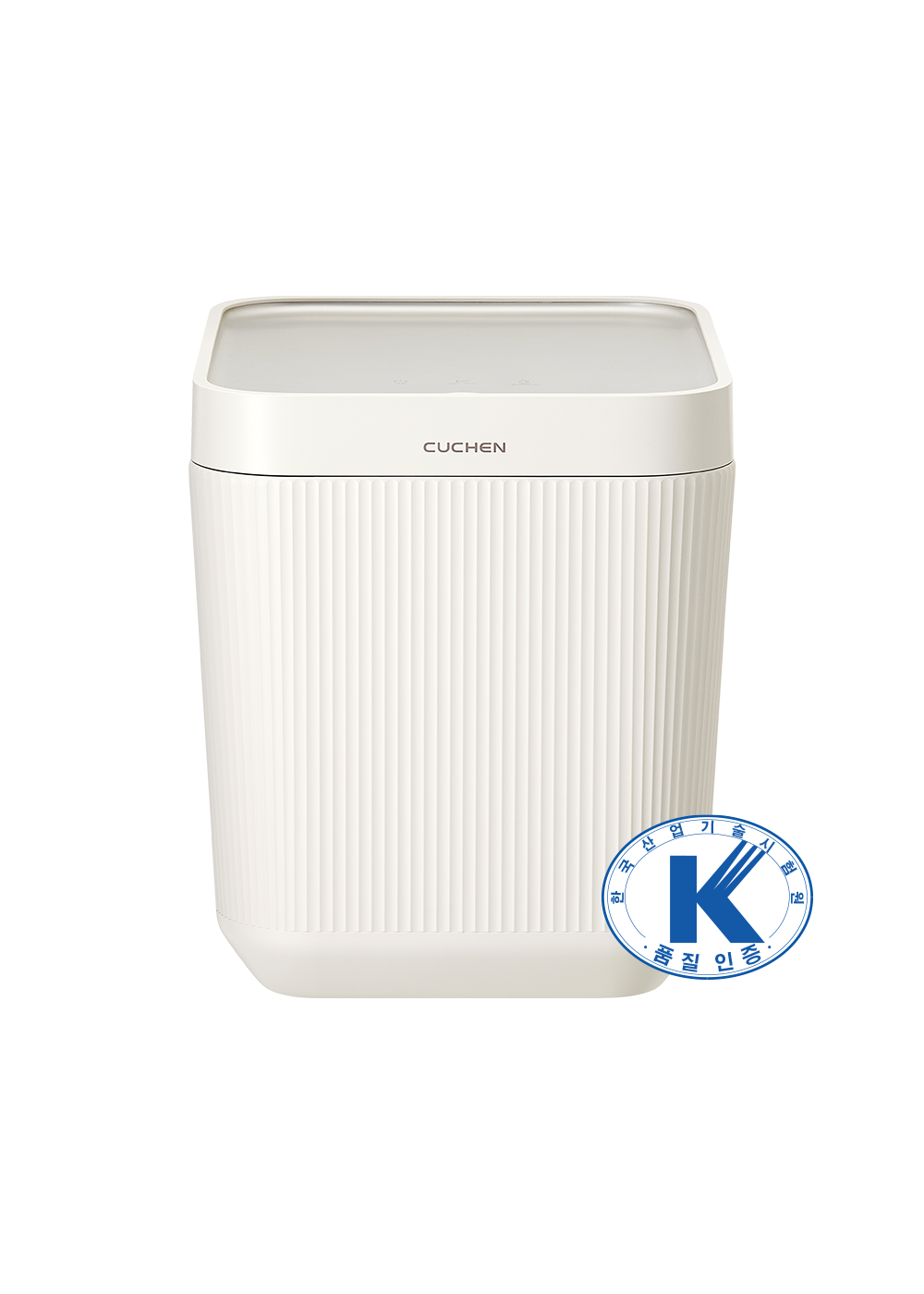
Officially listed 3L capacity280 × 348 × 330 mmHigh-temperature automatic cleaningActivated-carbon filter and LED
Official product information presents one-touch drying and grinding, a 4S blade, a ZERO BIN Wash cycle using 1.5 L of water, and a filter-replacement LED.
Compare processing time, cleaning, storage, installation space, filter care, and operating conditions against your daily routine.
01
How long does processing take?
ZERO FIT White lists a minimum of 2 to a maximum of 8 hours, while ZERO BIN Sand White lists approximately 5 to 8 hours. Actual time can vary with the amount, type, and moisture of the food waste, as well as the operating environment, so it is practical to plan a cycle before bedtime or before leaving home.
Compare the cleaning cycle and the water requirement together. ZERO FIT White uses a one-hour cleaning cycle with water, ZERO BIN Sand White uses a 70-minute cycle, and ZERO BIN Ivory Silver uses high-temperature automatic cleaning with 1.5 L of water.
If you do not process food waste right away, check storage capability and mid-cycle loading. ZERO FIT Beige and White list storage for up to two days and mid-cycle loading. During storage, the internal air-circulation system can operate the fan and motor.
Compare product width or external dimensions with installation clearance. ZERO FIT Beige is approximately 19 cm wide, and ZERO BIN Ivory Silver is 280 × 348 × 330 mm. For the applicable ZERO FIT series, the manual calls for an indoor, ventilated location with at least 20 cm from a wall and 60 cm above the filter.
The five CUCHEN models included in this guide are listed as 3L models. Remove excess moisture, keep food waste below the maximum line in the drying bin, and consider your daily volume, processing rhythm, and any storage function together.
The five CUCHEN models in this guide use drying and grinding. ZERO FIT White lists drying, grinding, cooling, and condition-sensing Auto Mode; ZERO BIN Ivory Silver lists one-touch drying and grinding with a 4S blade; and ZERO FIT Beige is introduced with a wide drying bin and triple bracket-and-blade structure.
Odor care depends on the filter, sealing structure, moisture removal, and care of the drying bin, cover, and packing. ZERO FIT Beige lists a composite activated-carbon system and sealing guard. ZERO BIN Ivory Silver lists an activated-carbon filter and LED. ZERO FIT Ivory and White and ZERO BIN Sand White include filter alerts or reset functions and cleaning features.
The official detail image for ZERO BIN Ivory Silver lists an average of 39.3 dB, while ZERO FIT Beige is introduced with low-noise design information. Install the unit level and in a ventilated area, then consider the operating times of storage, processing, and cleaning against your household routine.
What should a one- or two-person household compare?
Instead of selecting by household size alone, compare daily food-waste volume, the 3L maximum line, processing time, and kitchen installation space. If you collect food waste before processing, prioritize storage; if you need to coordinate timing, prioritize models with an officially stated processing range.
For a time-first comparison, start with ZERO FIT White or ZERO BIN Sand White. For a cleaning-first comparison, review ZERO FIT White, ZERO BIN Sand White, and ZERO BIN Ivory Silver. If you collect food waste before processing, compare the storage functions of ZERO FIT Beige and White.
Remove excess moisture and separate items identified as unsuitable for loading, such as metal, glass, vinyl, plastic, rubber, bones, and hard shells. Use filter alerts, cleaning modes, and removable cleaning parts as instructed. If unusual sound, odor, or an alert appears, check the product status with CUCHEN service at 1577-2797.
Use this guide to compare cleaning method, storage capability, filter care, processing time, and installation conditions first. Purchase conditions that change frequently, including price, coupons, and inventory, should be checked separately at the time of order.
Installation, loading, operation, and care based on the ZERO FIT manual.
Applicable models: CFP-EN301/302DBI, BN303DBI, and CN304/305/306DBI Series. The guidance covers installation, loading, operation, and care.
01 / INSTALL
Prepare a ventilated indoor location with clearance.
For the applicable ZERO FIT series, use a well-ventilated indoor location and keep at least 20 cm from a wall and 60 cm above the filter. Avoid enclosed cabinetry, direct sunlight, outdoors, and extreme-temperature environments.
Indoor and ventilated20 cm from wall60 cm above filter
02 / LOAD
Remove moisture and load below the MAX line.
Keep food waste below the maximum line in the drying bin and remove excess moisture. Do not load animal or fish bones, shellfish shells, metal, glass, vinyl, plastic, or other unsuitable materials listed in the manual.
Below MAX lineRemove moistureSeparate foreign objects
03 / RUN
Allow Auto Mode and cooling to finish.
Auto Mode operates in standard or intensive mode according to the food-waste condition, followed by cooling. Completion time can vary with the amount, type, moisture, and operating environment.
Automatic standard or intensive modeCooling modeVariable processing time
04 / CARE
Maintain cleaning, filters, and condensate together.
Run the cleaning cycle after emptying the contents and using the stated amount of water. Check remaining filter life and, when needed, drain condensate before fully reinstalling the rubber plug.
Cleaning modeRemaining filter lifeCondensate care
Care basis: Follow the applicable manual for installation, loading, cleaning, filters, and condensate.
EVERYDAY CHECK
The more often you use it, the more placement and care matter.
For the applicable series, keep the unit indoors and ventilated, leave 20 cm from a wall and 60 cm above the filter, remove moisture from food waste, load below the maximum line, and continue to check filters, cleaning, and condensate after purchase.
Ventilated indoor locationLoad below the MAX lineFilter, cleaning, and condensate care
DETAILED OPERATING FAQ
Official guidance worth knowing before using the product.
These are usage and care criteria for installation, storage, mid-cycle loading, filters, condensate, and unsuitable items.
FAQ 01Which ZERO FIT models does the cited manual apply to?
The official manual cited for installation, loading, processing, cleaning, filters, and condensate in this guide applies to CFP-EN301/302DBI, BN303DBI, and CN304/305/306DBI Series. Always check the current manual and product configuration for the specific model before purchase.
Install it indoors in a well-ventilated place, with at least 20 cm from a wall and 60 cm above the filter. Avoid enclosed spaces such as lower cabinets, direct sunlight, outdoors, in front of a heater, or near an air conditioner.
FAQ 03Can food waste be collected before processing?
ZERO FIT Storage Mode holds food waste in the drying bin before processing. The official guidance says automatic processing begins after up to two days of storage, and the fan and motor can run during storage as part of the internal air-circulation system.
FAQ 04Can food waste be added while the unit is operating?
To avoid burns, open the lid with care during processing, add the food waste, then close the lid. Processing time can increase depending on the type and amount added; after the lid is closed, processing continues according to the applicable instructions.
The manual manages the filter on a total-use basis of 150 hours. A filter alert appears after 120 accumulated operating hours or when remaining life is below 20%. After replacement, perform the filter-reset procedure in standby mode.
Condensate can accumulate when moisture-rich food waste is processed continuously or when there is a significant temperature difference between the inside of the unit and its surroundings. Open the rubber plug on the rear bottom, drain the water into a container or sink, then reinstall the plug fully.
Do not load animal or fish bones, shellfish shells, metal, glass, vinyl, plastic, rubber, wooden chopsticks, toothpicks, fruit stems or seeds, or hard peels. If an unsuitable item enters the unit, stop operation, remove it, and separate it as general waste.
FAQ 08How should starchy, sugary, or oily food waste be handled?
For foods high in starch, sugar, or oil—such as rice, glass noodles, rice cakes, potatoes, fruit syrup, chocolate, fatty cuts, or fried foods—mix them with other food waste and avoid excessive loading. If difficult residue remains, use the water-only cleaning cycle.
Sources include official CUCHEN launch information, the official store, customer-support FAQ, and the user manual.
01
Product launch and construction
Official CUCHEN ZERO FIT launch information
Wide 3L drying bin, approximately 19 cm width, storage and mid-cycle loading, filter-remaining indicator, sealing, and activated-carbon structure.View source
02
Installation, care, and safety
CUCHEN food waste disposer support FAQ
Installation clearance, Storage Mode, filters, loading, and care guidance for the ZERO FIT series.View source
03
User manual
Official CUCHEN ZERO FIT manual for applicable series
Current purchase conditions and official product pages for the five models listed in this guide.View source
THE LAST CHECK
A food waste disposer choice matched to your routine.
Compare processing time, cleaning, storage, installation, filters, and loading guidance. Prices, coupons, and inventory can change at the time of order.